Garage door maintenance: the short answer
Garage door maintenance means a quick monthly check and one pro visit a year. Each month, look over the hardware, test the auto reverse with a 2x4 and check the sensors. Lubricate rollers, hinges and bearings once a year, but not the tracks. Leave springs and cables to a technician.
Good garage door maintenance takes about 15 minutes a month and one pro visit a year. That small habit catches worn springs, loose bolts and lazy sensors before they turn into a stuck door. In Florida, salt air, humidity and summer storms make it matter even more. This checklist shows what you can do yourself and what to leave to a technician.
DASMA, the door industry’s trade group, recommends monthly safety checks plus a yearly visit from a trained technician. The steps below follow that advice.
Your monthly garage door maintenance checklist
Do these garage door maintenance checks with the door closed and the car out of the way. They take a few minutes once you know the routine.
- Look over the door and hardware for loose bolts, bent brackets, dents or rust.
- Watch the door open and close. Listen for grinding, scraping or a jerky motion.
- Look at the cables near the bottom corners for frays or broken strands.
- Check that both safety sensors are clean, tight and facing each other.
- Run the reversal test, explained below.
Write down anything that changed since last month. A noise that gets louder or a door that starts to shake is worth a call before it fails.

The two safety tests that matter most
The first is the reversal test. Chamberlain’s maintenance guide says to lay a 2×4 flat on the floor in the middle of the door’s path. Close the door. It should touch the board and reverse. If it stops and stays down, the opener needs adjusting right away.
The second is the sensor test. While the door is closing, wave something through the beam near the floor. The door should stop and go back up. If it keeps closing, do not use the opener until it is fixed. These two features are what keep the door from closing on a child or a pet.
Check the balance a few times a year
A balanced door is easy on the opener and lasts longer. With the door closed, pull the red release cord to disconnect the opener. Lift the door halfway by hand and let go. It should stay roughly in place.
If it drops or rises on its own, the springs are out of balance. DASMA warns that springs are the most dangerous part of the door. Do not adjust them yourself. Book spring repair instead, then reconnect the opener as our manual opening guide explains.

Lubricate the right parts once a year
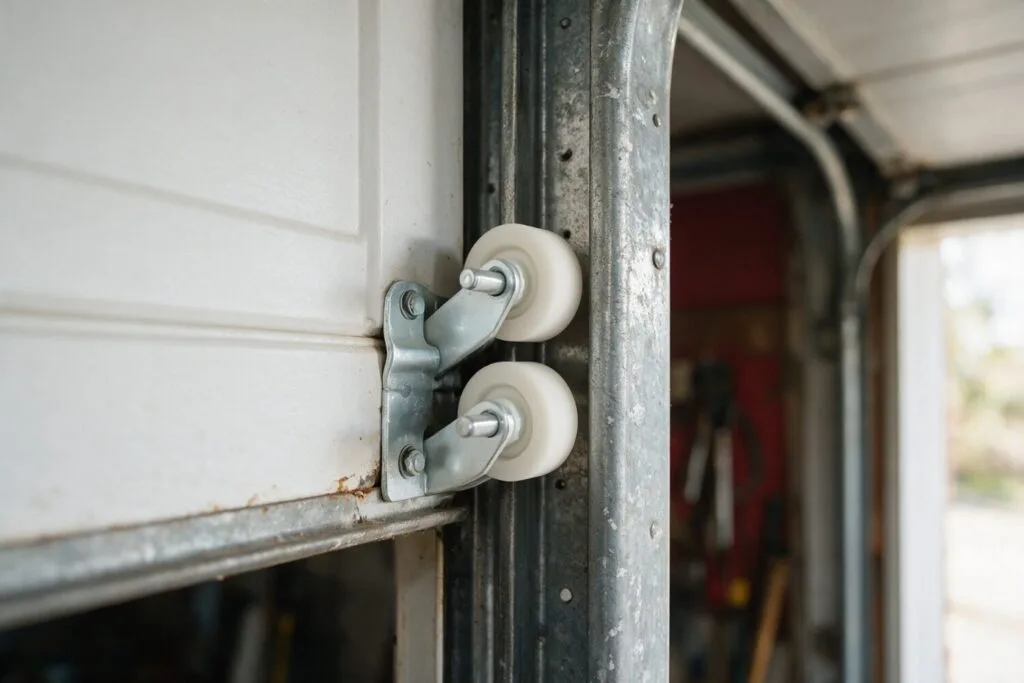
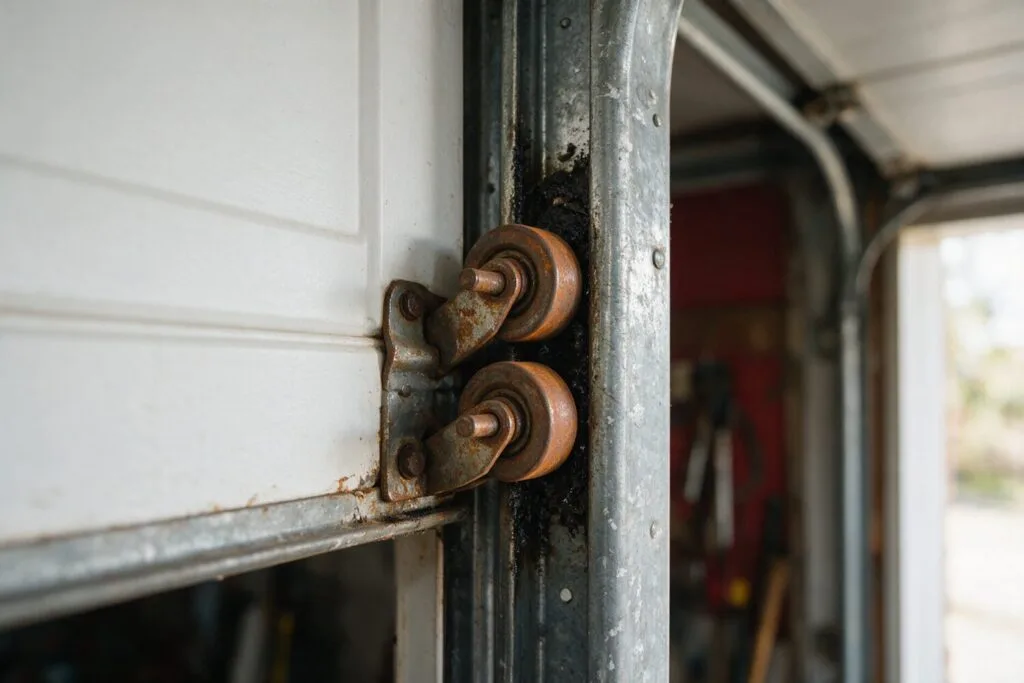
Chamberlain recommends a small amount of garage door lubricant on the rollers, bearings and hinges once a year. It also says not to lubricate the tracks. Grease in the tracks catches dirt and sand and can make rollers slide instead of roll.
Some openers also need the rail greased every two to three years. Belt drive openers usually do not need the belt lubricated. Our full guide on how to lubricate a garage door covers which spray to use and where.
Extra garage door maintenance for Florida homes
Near the coast, salt air speeds up rust on springs, hinges and screws. Rinse the outside of the door with fresh water a few times a year, and wipe the hardware dry. Look closely for rust spots after each storm season.

Humidity and heat wear out rubber parts too. Check the bottom seal for cracks or gaps, because that is where water, sand and bugs get in. If light shows under a closed door, see our guide to garage door seal replacement. Before hurricane season, add the checks in our hurricane checklist.
What to leave to a technician
Springs, cables, the bottom brackets and anything attached to them are under high tension. DASMA says those parts should be repaired only by a trained technician. The same goes for a door that is off its track or hangs crooked.
A yearly professional tune up covers what a homeowner should not touch. That includes spring tension, cable condition, track alignment and the opener’s force and limit settings.
Regular garage door maintenance keeps small problems small. Did your checks turn up a worn spring, a frayed cable or a failed test? Call Majestic Garage Door at (813) 774-1127. We answer 24/7 across Tampa Bay and Southwest Florida, and we agree on the price before any work starts.
Questions about garage door upkeep
Do your own quick checks once a month and book a professional tune up once a year. The yearly visit covers spring tension, cables, track alignment and opener settings. In coastal Florida, adding a rust check after each storm season is a good habit, because salt air wears hardware faster.
A typical tune up covers the springs, cables, rollers, hinges, tracks and bottom seal. The technician also tests balance, the auto reverse and the safety sensors, and adjusts the opener force and limits. Ask for the list in writing, so you can compare it with next year.
Yes. Rinse it with fresh water and a mild soap a few times a year, then dry the hardware. This matters most near the coast, where salt builds up and speeds rust. Avoid pressure washing the seals and the sensors, and never spray water into the opener.
Shaking usually comes from worn rollers, loose hinges or a door that is out of balance. A bent track can do it too. Tighten nothing near the springs or the bottom brackets. If the shaking is new or getting worse, have the door checked before a part fails.
No. New doors still need monthly safety checks and yearly lubrication. Springs, rollers and seals wear from the first day of use. Starting the routine early also helps you spot an install problem while it is still easy to fix.
Sources on garage door maintenance
- Does My Garage Door Opener Require Any Monthly or Annual Maintenance? Chamberlain Group Support
- Garage Doors Safety Tips DASMA