Garage door seals: the short answer
A garage door has three seals: the bottom seal, the side and top stop molding, and an optional threshold seal on the floor. If you see daylight, water or sand under the door, the bottom seal is usually worn. Most homeowners can slide a new one into the retainer with a helper.
A worn garage door bottom seal is the reason most garages let in water, sand, leaves and bugs. The rubber strip along the bottom of the door gets hard and cracked in the Florida sun. Once it stops touching the floor, light shows under the door and so does everything else. The good news is that a new seal is one of the few door repairs most homeowners can do.
This guide covers the three kinds of weather stripping on a garage door. It shows how to tell which one failed, and how to replace a garage door bottom seal safely.
The three seals on a garage door
The bottom seal runs along the bottom edge of the door. On most steel doors, it slides into an aluminum channel called a retainer. On older wood doors, it is often nailed or screwed straight to the bottom board.
The side and top seals are flexible strips along the door frame, often called stop molding. They press against the face of the door when it is closed. A threshold seal is a raised rubber strip glued to the garage floor. It helps when the floor is uneven or water flows toward the door.

Signs your weather stripping needs replacing
Close the door and turn off the garage light during the day. Daylight along the bottom or sides means the seal has gaps. Water stains, sand or dead bugs just inside the door tell the same story.
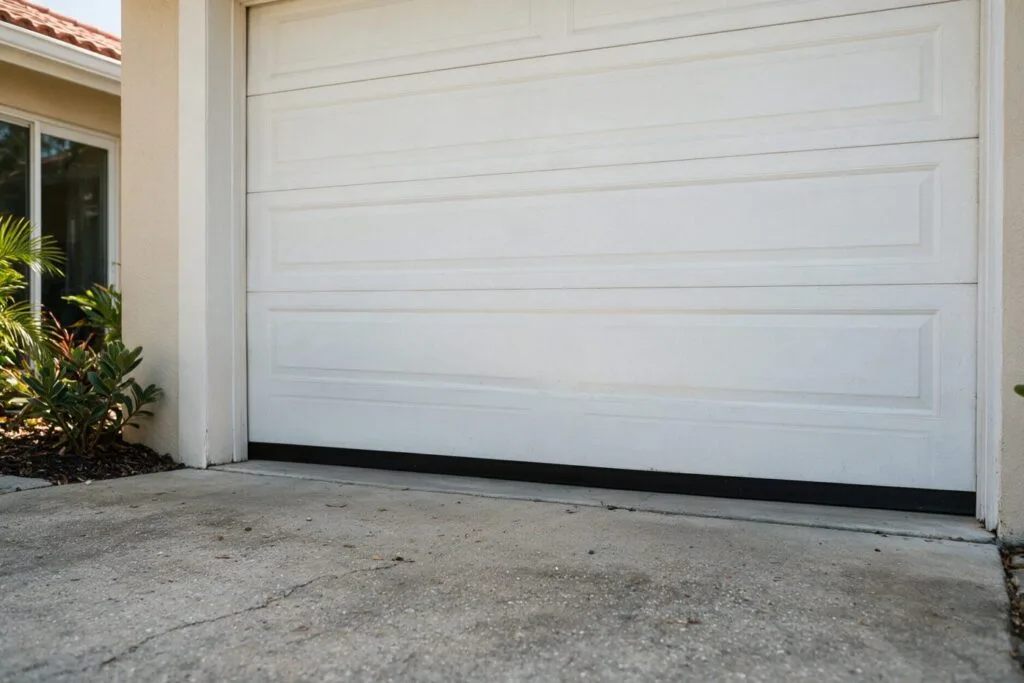
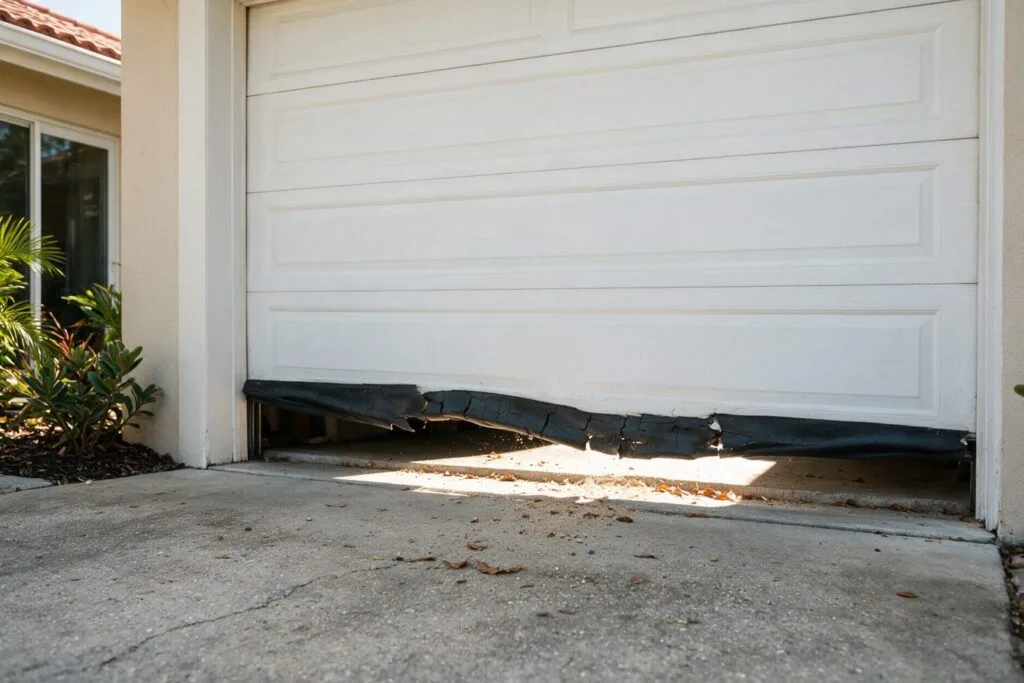
Press the rubber with your thumb. It should feel soft and spring back. Rubber that is hard, flat, split or missing in places needs replacing. In Florida, sun on the outside edge usually ruins it first.
Which piece of garage door weather stripping needs replacing?
The worn piece is the one next to the light or water you see. Each part of your garage door weather stripping seals one edge of the door. DASMA’s garage door terminology sheet names each one.
- Bottom seal, or astragal. The soft strip on the bottom edge that presses on the floor. A gap or water under the door points here.
- Retainer. The channel on the bottom edge that holds the astragal. If a new seal will not stay in, the retainer may be bent.
- Stop molding, or jamb seal. The strip nailed to the frame on the sides and top. Light along the edges means it no longer touches the door.
- Threshold seal. A raised strip glued to the floor. Loose ends or a flat hump mean it is worn.
Sun does most of the damage. Garaga, a door maker, says UV rays attack the polymers in the rubber and make it crack over time. It also lists cracked, dried out, discolored or droopy rubber as signs a bottom seal is done. So check the side of the door that gets the most sun first.
How to replace a garage door bottom seal
First, find out which seal you have. Cut a short piece off one end and take it to the store. Or check the shape of the retainer channel. Common shapes are a T, a bead and a J. Then measure the full width of the door.
- Open the door to about waist height, then unplug the opener so it cannot move.
- Slide the old seal out of the retainer. Cut it into pieces if it is stuck.
- Clean the channel well with a rag and a little soapy water.
- Wet the edges of the new seal with a few drops of dish soap, so it slides.
- Feed it into the channel from one end while a helper pulls it through.
- Trim the ends and pinch the channel ends gently so the seal cannot creep out.
Never stand or reach under the door while it is raised. If the door will not stay put at waist height, stop. That points to a spring problem, which needs spring repair before anything else. Family Handyman’s step by step guide shows the same steps with photos.

When the problem is not the seal
Sometimes a new garage door bottom seal still leaves a gap. That usually means the floor is uneven or sloped, or the door is not sitting level. A threshold seal on the floor can close a small dip. A larger gap may mean the door needs its cables or limits adjusted.
A bent or rusted retainer is another common cause. If the channel is crushed, the seal will not seat. The bottom bracket sits right next to it and is under spring tension, so leave that part to a technician. Our off track and cable repair team handles both.
Why good seals matter more in Florida
Summer storms drive rain sideways under doors, especially on west and south facing garages. A tight seal keeps that water off your floor and away from anything stored low. It also keeps out sand and the palmetto bugs that love a warm garage.

Seals are part of a bigger yearly routine. Our garage door maintenance checklist shows what else to check each season. Is the retainer damaged or the gap uneven? Would you rather have it done right? Call Majestic Garage Door at (813) 774-1127. We answer 24/7 and agree on the price before any work starts.
Questions about garage door seals
Measure the full width of the door, then match the seal shape to your retainer channel. Cut a short sample off the old seal or photograph the end of the channel and take it to the store. Common shapes are T, bead and J. Buy a little extra length to trim.
Yes. A threshold seal is a raised rubber strip glued to the floor where the door closes. It helps when the floor dips or water runs toward the door. Clean and dry the concrete well first, and keep it clear of the safety sensor beam and the tracks.
The floor may be sloped or uneven, the door may not sit level, or the driveway may send water straight at it. A threshold seal can stop a small gap. If one side of the door sits higher than the other, the cables or limits may need adjusting by a technician.
It depends on sun, heat and use. In Florida, the outside edge often hardens and cracks sooner than in milder climates. Check it a few times a year. Replace it as soon as it feels hard, shows gaps or lets in light, rather than waiting for a fixed number of years.
Yes. When the door is closed, the seal should press lightly on the floor along the whole width, with no daylight showing. If it squashes flat at one end and lifts at the other, the door or the floor is not level. Fix that cause, or the new seal will wear out unevenly.
Not quite. The bottom seal is one part of garage door weather stripping. DASMA uses the term for any seal around the edges of the door or between its sections. That includes the bottom seal, the stop molding on the sides and top, and the joints between panels. Replace only the part that leaks.